NEW DELHI — India and the US discussed the possibility of cooperation in carrier technology this week, but sources in India’s Ministry of Defence (MoD) said no agreement was reached.
The discussion took place from Feb. 15-18 in a second meeting of the Joint Working Group on Aircraft Carrier Technology Co-operation (JWGACTC), part of the Indo-US Defense Trade and Technology Initiative.
“Various aspects of cooperation in the field of aircraft carrier technology were discussed and a joint statement signed,” the MoD said in a statement Feb.19.
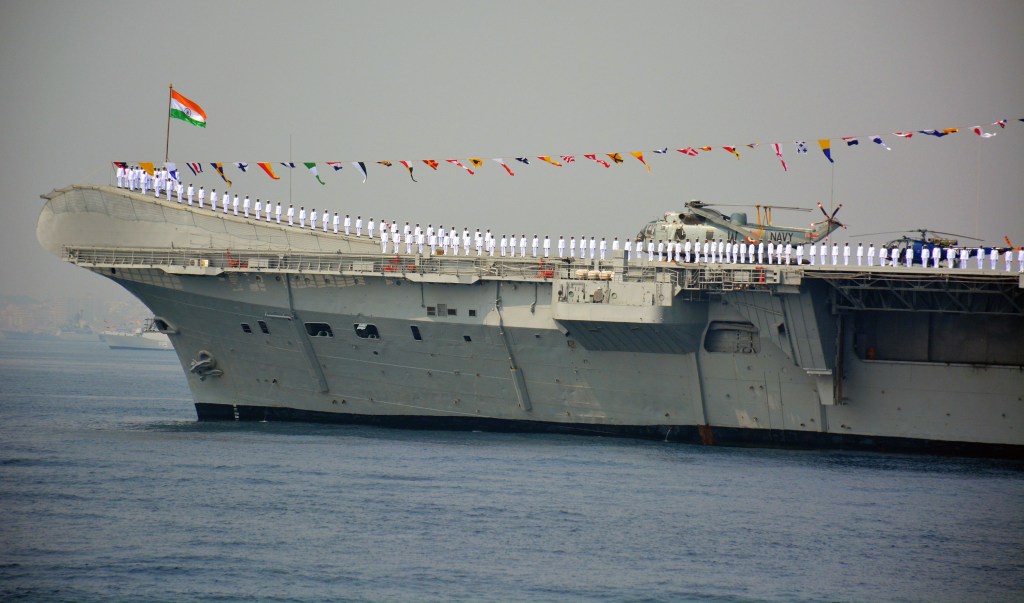
India is exploring the possibility of US cooperation in building a second indigenous aircraft carrier (IAC-2), INS Vishal, which is still on the drawing board.
The Indian Navy has kept the option open for use of an Electromagnetic Aircraft Launch System (EMALS), regarded as an advanced system, which the US offered to India for IAC-2 during US President Barack Obama’s visit to India in January 2015.
EMALS system is expected to be more versatile, allowing a variety of aircraft to be launched with the same system, which could include medium- and light-weight aircraft and India’s homegrown Light Combat Aircraft.
Planned to carry more than 50 fighter jets and helicopters, IAC-2 will be built in India. The Indian Navy is deciding whether IAC-2 will have a conventional or nuclear propulsion system. The ship is expected to cost more than $6 billion.
Email: vraghuvanshi@defensenews.com