Native Articles
-

Presented By:

Commercial imaging companies solved the data access problem; now they must tackle reliability.
Commercial Earth observation (EO) has largely solved the access problem. Defense and national security organizations can now task commercial satellites with speed and scale unimaginable a decade ago. But access is not the same as reliability.…
-

Presented By:

Defending the Edge: Proven Air Defense for the Modern Fight
From Ukraine to Iran, recent conflicts have underscored how profoundly low-cost, proliferated and adaptable aerial threats are reshaping the modern battlefield. Small drones and one-way attack systems are compressing decision timelines, stressing traditional defenses and exposing…
-
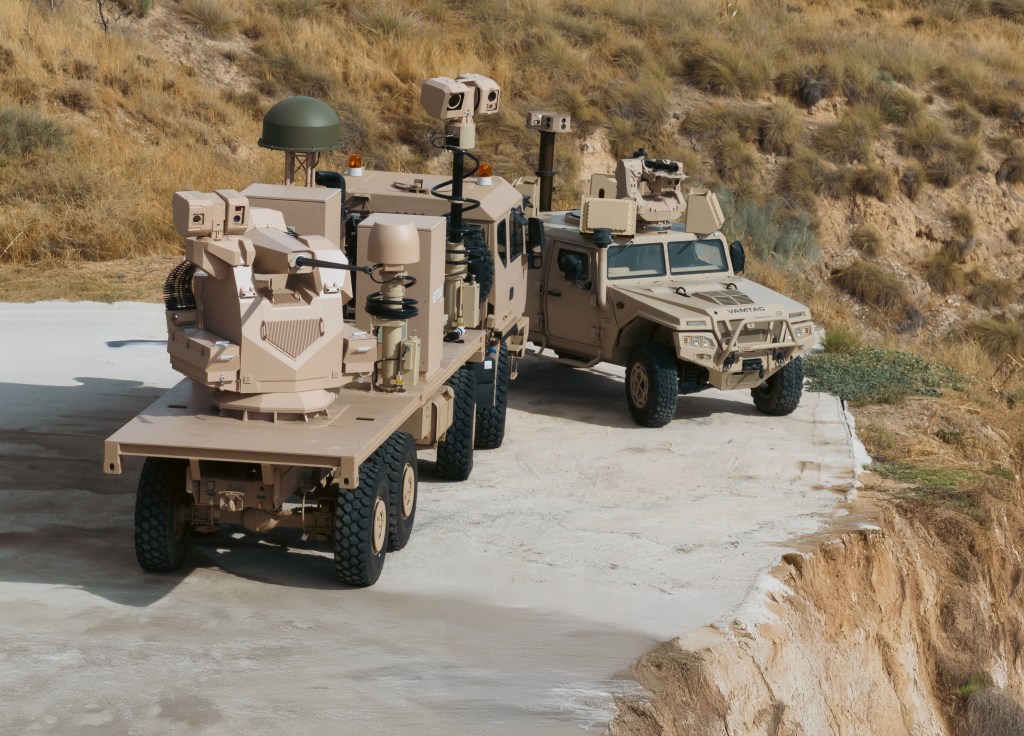
Land, sea and air, the triple cover with which EM&E Group wants to shield the eastern flank
Security in Eastern Europe is no longer measured only in kilometres of land border. Landlocked countries on the eastern flank face a broader challenge: to simultaneously monitor their land borders, waters and airspace in the face of the growing threat of unmanned systems. This combined need explains the growing interest of these countries in integrating…
-

Why “set it and forget it” does not work for Life Insurance
USAA Life Insurance Company and USAA Life Insurance Company of New York Many service members are automatically enrolled in Servicemembers’ Group Life Insurance (SGLI) and then rarely think about it again. Early in a career, that may be understandable. A young single service member with no dependents, no mortgage, and limited financial obligations may be…
-

As Costs Rise, End-of-Life Planning is Mission-Critical for Military Families
For service members, veterans, and their families, financial readiness has always been part of the mission. But as costs rise across housing, healthcare, and everyday essentials, another critical area is gaining urgency: planning for end-of-life expenses. Unlike deployments or Permanent Change of Station (PCS) moves, end-of-life costs are often unplanned—and unavoidable. Funeral services, final medical…
-

Webcast: Project Overmatch
This event happened on January 26, 2023 Artificial intelligence and machine learning (AI/ML) are paving the way for future military activities, and the Navy’s Project Overmatch is exploring how to use them to develop strategies that keep the U.S. ahead of near-peer adversaries such as Russia and China. Vessels utilizing these technologies will evolve to learn the right behaviors in real time and ultimately better suit the mission at hand…
-

Q&A: The State of Hypersonics
The potential of hypersonic weapons has military leaders rethinking everything they knew about missiles. A combination of speed — hypersonics can exceed Mach 5, or five times the speed of sound — maneuverability and flexibility means that hypersonics break the old rules of both missile defense and offense. Detecting, identifying and killing a missile that can nimbly maneuver at such high speeds creates a number of challenges when it comes…
-
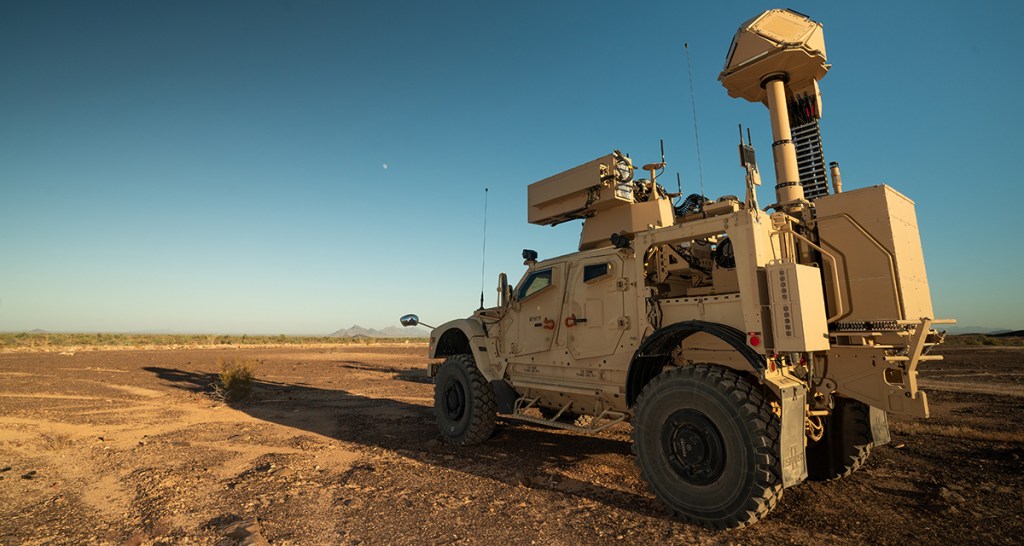
Birds, Planes, Drones – KuRFS Radar Can Spot Them All
KuRFS: It stands for Ku-band Radio Frequency System. And it stands up against enemy drones, along with artillery and other small, fast threats. The advanced, adaptable, multi-mission radar made by Raytheon Missiles & Defense, a Raytheon Technologies business, is the U.S. Army’s ‘go-to’ sensor to find all classes of unmanned aircraft systems, or UAS, commonly called drones. “KuRFS is tailor-made for the counter-UAS mission, and no other radar in the…
-
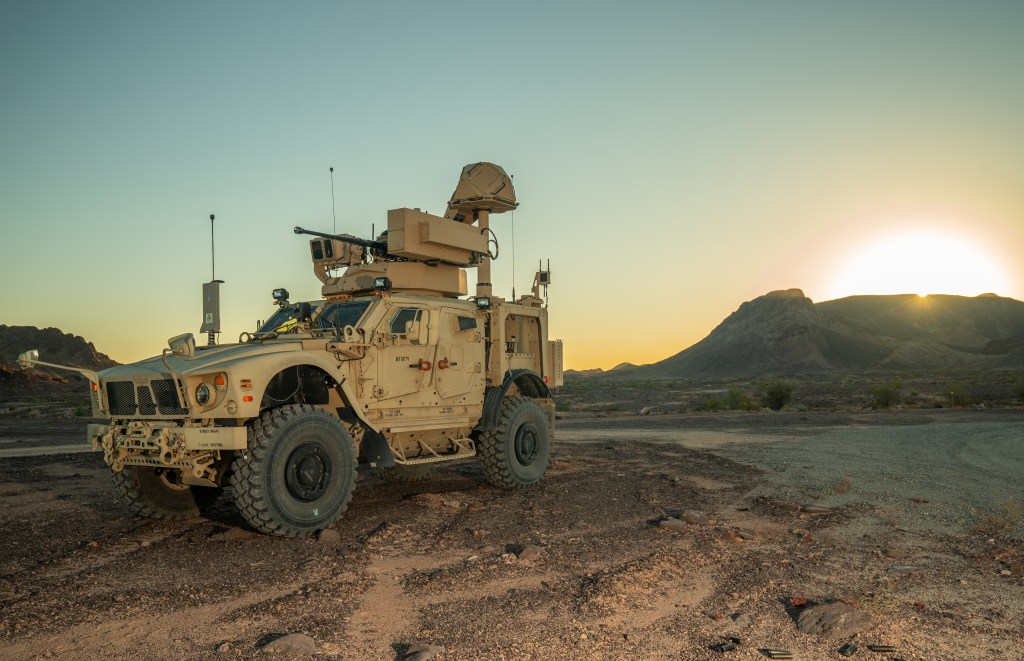
Q&A: The Role of CUAS on the Modern Battlefield
Unmanned aircraft systems (UAS) open up an entirely new world for those looking to perform quick-strike, low-risk attacks on infrastructure, opposing forces or even civilian targets. Due to their size and maneuverability, they are hard to detect and track. They are low cost and the fact that they can be built or modified using commercial off-the-shelf hardware makes them expendable. And if a pilot is sitting miles — or hundreds,…
-
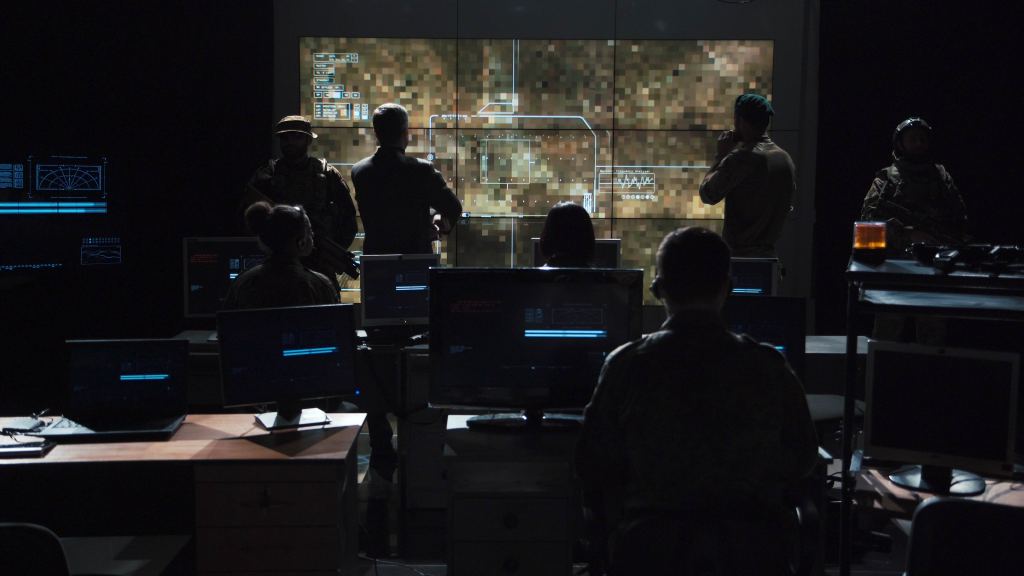
How Hybrid-First Cloud Technology Enables Government Innovation
Hybrid cloud architectures have taken hold in recent years as the US government looks to unify its many different on-premises, custom-built, and cloud applications. However, as federal agencies begin to adopt more cloud technologies, one common challenge has emerged: the need to comply with stringent regulatory standards that govern Secret and Top Secret data. Regulations like the Intelligence Community Directive (ICD) 503; the Memorandum on Improving the Cybersecurity of National…
-

Digital Modernization Solutions for Multi-Domain Operations
In the face of unprecedented geopolitical competition and increasingly sophisticated and persistent cyber threats, the Department of Defense (DoD) is undertaking digital modernization to protect national security systems and warfighting platforms. By incorporating commercial technologies into operational systems and platforms, defense leaders can leverage data more effectively and achieve a higher level of sustained force readiness. What has not changed is the need for precise mission planning, comprehensive personnel readiness,…
-

Webcast: The Air Force’s Strategy to Maintain Air Dominance
This event happened on November 10, 2022 Maintaining air superiority is a critical concern for the U.S. military, which relies on dominating airspace as one component of its “firepower over manpower” tactical strategy. The U.S. Air Force is adopting a “four-plus-one” strategy to meet the goals of its air dominance plan, moving away from its current seven fleets of fighter aircraft. In addition to manned aircraft, unmanned support and attack…
-
Webcast: Building the Future Supply Chain
This event happened on October 28, 2022 The U.S. military has long been unparalleled in its ability to move manpower and materiel around the globe. But maintaining that edge is harder than ever, as supply chain disruptions, adversaries looking to degrade or obstruct logistics efforts and the need for ever faster and more flexible response force packages creates significant challenges for logistics. The ongoing invasion of Ukraine shows the challenges…
-

Envisioning a World Without Pink Ribbons
Breast cancer is the most common form of cancer among female service members, who constitute about 20 percent of the U.S. military. The Department of Defense (DoD) is understandably concerned about this prevalence in its commitment to health care, as well as to force readiness. Therefore, prevention, screening, early diagnosis, treatment, and continuing care all represent key areas of DoD-sponsored research. President Biden has also recently called attention to cancer…
-
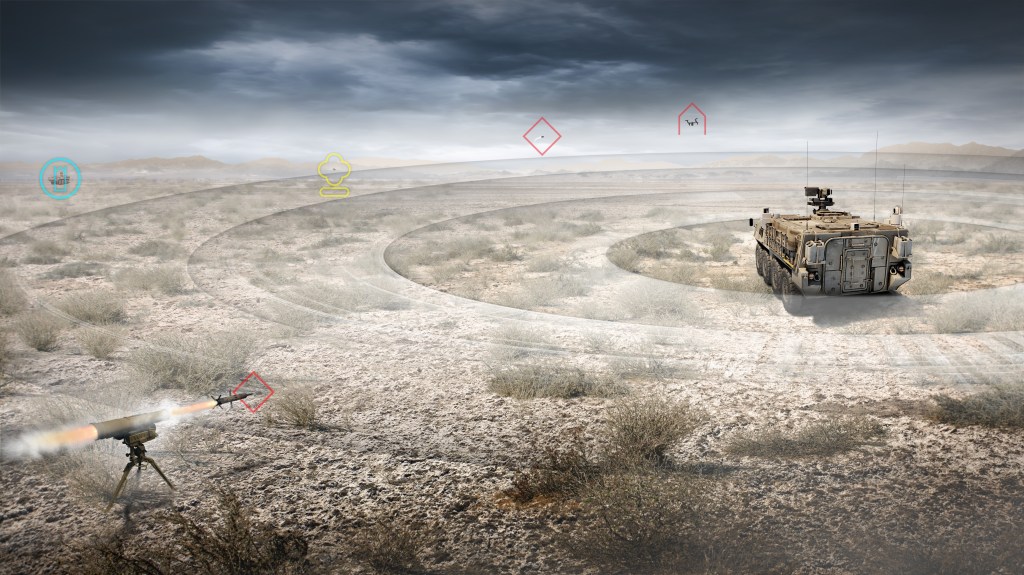
Lethality on the Battlefield
Tanks and infantry fighting vehicles are the mainstay of armored or maneuver warfare. Still, soldiers who ride them into battle face a barrage of threats ranging from challenging terrain to complex adversarial threat environments. With this in mind, BAE Systems has tapped into our extensive aircraft survivability experience to develop next-generation technologies to protect enduring and future ground combat vehicle fleets by enhancing their survivability, increasing their maneuverability, and enabling…
-

AUSA 2022: Connecting the Battlefield — DATA, JADC2 & Experimentation
This event happened on October 12, 2022 Across the Defense Department, military leaders want to be able to connect any sensor to any shooter. That means creating a connected battlefield, first with the U.S. military and then with allies. But a key part of this evolution, including for programs like JADC2, is a more sophisticated use of sharing data and building networks. In this panel event at AUSA, Defense News…
-

AUSA 2022: Altering Acquisition Needs
This event happened on October 11, 2022 Russia’s invasion into Ukraine has prompted questions in militaries throughout the world. How have these events changed how Washington thinks of its own national security strategy, including its doctrine and acquisition practices? How should it re-examine the capabilities that will be necessary in a near-peer fight? And most importantly, what can be learned of the events from the past eight months? This event…
-

AUSA 2022: How Digital Engineering is Shaping Modernization
This event happened on October 11, 2022 The Army is putting its faith in a series of digital initiatives including digital twins, open-systems architecture, artificial intelligence and machine learning to transform how it fields and sustains its most disruptive technologies and weapons platforms. These approaches can use formalized models to create an authoritative source that allows developers the flexibility to observe and test how modifications to an ecosystem of parts…
-
AUSA 2022: Brute Force vs. Investments in Emerging Tech
This event happened on October 10, 2022 Russia’s invasion into Ukraine has prompted questions in militaries throughout the world. How have these events changed how Washington thinks of its own national security strategy, including its doctrine and acquisition practices? How should it re-examine the capabilities that will be necessary in a near-peer fight? And most importantly, what can be learned of the events from the past eight months? This event…
-

AUSA 2022: State of Modernization
This event happened on October 10, 2022 The Army identified its major modernization priorities — long range precision fires; next generation combat vehicles; future vertical lift; network, air and missile defense; and soldier lethality — in 2019. Three years into the long-term project, what is the state of these priorities? What challenges remain and what solutions have been identified to meeting the stated timeframes? In this panel event hosted by…
-
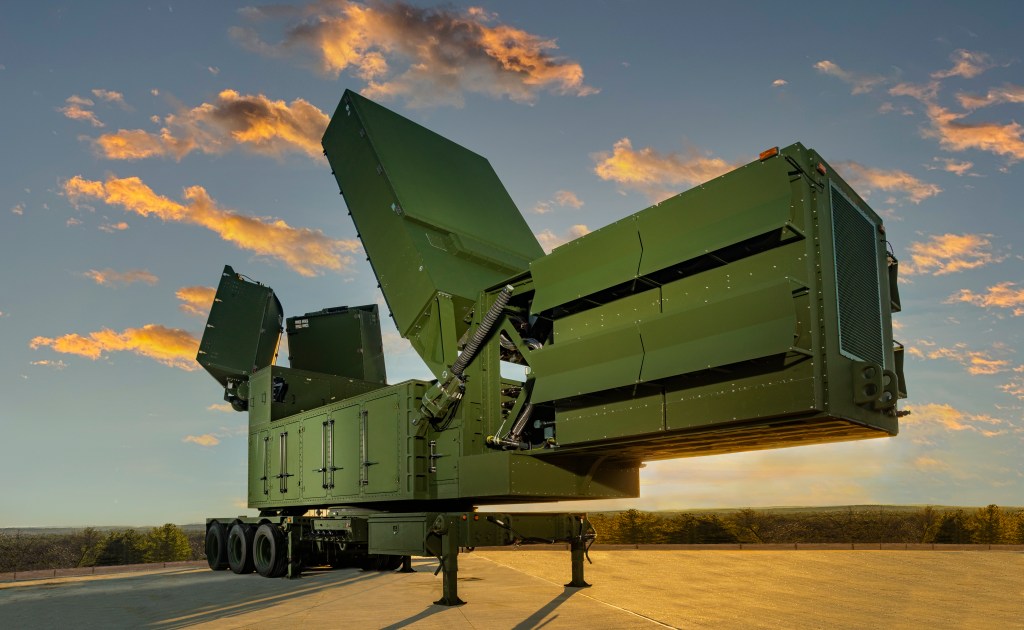
Q&A: How LTAMDS Defends Against Aerial Threats
As the nature of aerial threats changes, radar systems have to adapt to provide effective defense. Modern cruise missiles don’t fly a static trajectory. Unmanned aerial vehicles can be piloted by a human thousands of miles away. Hypersonics reach speeds that can put them within striking distance before a radar system can report them as anything other than a blob on a screen. Those threats require a radar system robust…
-
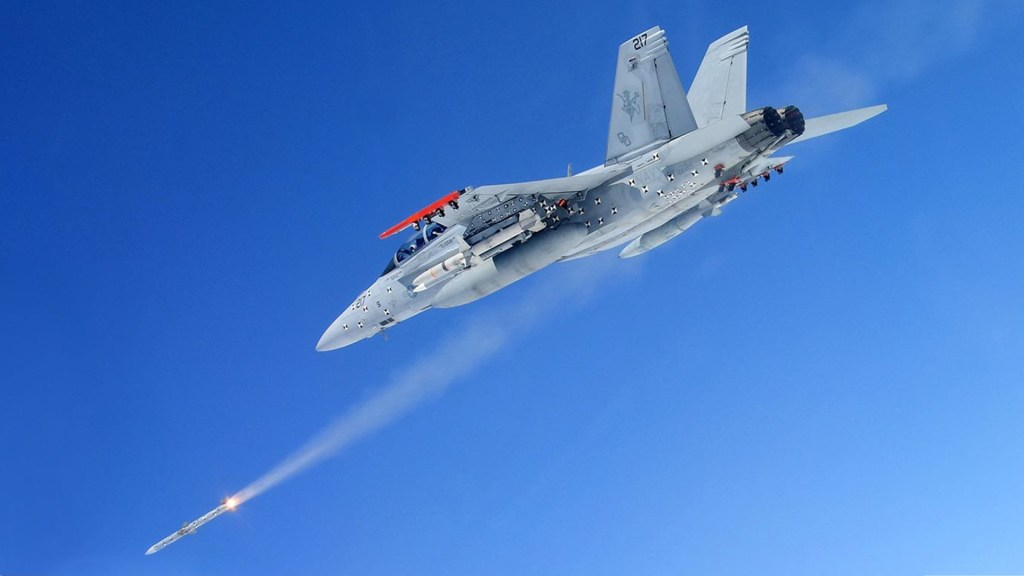
AMRAAM Missile: A long legacy with new capability
The AMRAAM missile is the air-to-air weapon of choice for U.S. and allied militaries. And it keeps getting better. Its roots go back three decades, but today’s AMRAAM missile is vastly different from its predecessors, thanks to multiple updates of its hardware and software. “The AMRAAM missile is arguably the most sophisticated air-to-air weapon in use today and for good reason. It has to be in order to address the…
-

Webcast: SMD Debrief 2022
This event took place on August 12, 2022 The U.S. space and missile defense community’s challenge is simple: stay ahead of the threat from nations such as China, North Korea and Russia. Across the Department of Defense, leaders are adapting existing systems to better counter the current threat, moving forward on major programs of record that improve nearly every element of the kill chain, and investing in next-generation technologies, such…
-
Building a Data-Centric Mission Partner Environment
When the U.S. military withdrew warfighters from Afghanistan, one of the biggest challenges was to maintain data flow across the joint forces while dismantling a 20-year-old traditional infrastructure. To keep information moving, DOD rapidly replaced the legacy IT infrastructure with a cloud-native network. This transformational network did more than simply maintain data flow. The cloud-native approach offered increased data storage, resilience to server crashes, increased flexibility in data access, and…